
-

While it might be a little far-fetched to imagine top-rank tennis players performing calculations on the baseline, Dr Nick Ovenden has done just that to come up with a mathematical analysis of winning serves. He talks to Rachel Thomas about how spin's the thing in this short article aimed at general readers and older students.
-
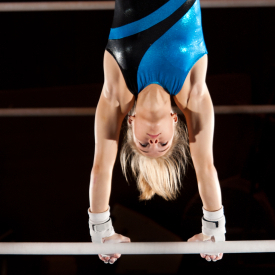
These 10 questions encourage students to explore mathematical modelling in the context of several different sports including track and field athletics, shooting, football, tennis, basketball and gymnastics. This activity is designed to be accessible to A-level mechanics students (Key Stage 5).
-

Sports statisticians, trainers and competitors create graphs, charts and diagrams to help them to analyse performance, inform training programmes or improve motivation. This activity encourages students to consider and analyse representations of data from a number of sports, and to discuss whether the right representation has been chosen for the purpose. It is aimed at secondary students (Key Stages 3 and 4).
-
The epic Isner-Mahut match at Wimbledon in 2010, where the fifth set lasted for three days, may have sent shivers down the spine of Olympics schedulers. But how freakish an event was it, and what's the probability that a similar situation might arise in 2012? This article, aimed at older students and the general public, investigates.
-
What are the probabilities of winning at tennis? This challenging activity is designed to be accessible to students of A-Level Maths (Key Stage 5).
-

As London is heading for the 2012 Olympics, it's not just athletes who are gearing up for action. Engineers, too, are working hard to produce the cutting-edge sporting equipment that guarantees record performances. If you're a tennis player, your most important piece of equipment is your racket. Over recent decades new materials have made tennis rackets ever bigger, lighter and more powerful. So what kind of science goes into designing new rackets?